
Learning how to read Copart auction listings involves analyzing critical data points such as primary and secondary damage codes, odometer classifications, and specific lot number suffixes that indicate the vehicle's intake year. Investors should also evaluate the estimated retail value and title type to distinguish between minor cosmetic repairs and significant mechanical or structural issues. This careful review of the vehicle's history and current status allows bidders to make informed decisions and avoid costly salvage risks.
Navigating a Copart listing feels straightforward until you realize that the most critical information often hides in plain sight. Many amateur bidders lose thousands of dollars because they take surface level data, such as the Run and Drive icon, at face value without questioning the underlying vehicle history. For the institutional investor, these listings are not just descriptions; they are complex datasets that require precise decoding to mitigate risk and ensure profitability. In this guide, we move beyond the basics to analyze the hidden signals within lot numbers and title brandings. You will learn how to interpret specific odometer codes, navigate regional market variations like the Ontario landscape, and apply the Five Minute Rule to every potential acquisition. By mastering these institutional level insights, you can transform a cursory glance into a calculated ROI forecast.
The Difference Between a Bidder and an Institutional Buyer
The primary distinction between a hobbyist and an institutional buyer lies in the core objective of the transaction. A casual bidder typically seeks a cheap car or a personal project, often making decisions based on visual condition or brand preference. For the institutional investor, however, a vehicle is not merely a machine but a complex data set. Understanding how to read Copart auction listings at this level means analyzing a vehicle's potential for profit rather than its utility.
Professional investors in White Rock and throughout Canada rely on precision analytics to navigate the high volume of the auction floor. They do not search; they filter. This approach moves beyond the surface level to identify the underlying financial potential of a lot. Every asset is screened using a proprietary Investment Score™, ensuring that capital is only deployed when the data supports a high-probability outcome. By treating the auction platform as a sophisticated financial exchange, buyers move away from emotional bidding and toward structured, data-driven decisions. Securing an Institutional-grade membership provides the tools necessary to evaluate these listings through a lens of risk mitigation and ROI forecasting, turning a speculative process into a disciplined investment strategy.
Anatomy of a Copart Listing: Visible Data vs. Hidden Signals

To master how to read Copart auction listings, one must look past the surface level descriptors and understand the financial implications of each data field. While most users see a list of specifications, an institutional investor sees a series of risk factors and margin indicators.
The most prominent figure is the Actual Cash Value (ACV). If you are wondering what ACV means in auction contexts, it is the estimated retail value of the vehicle prior to the accident or loss event as reported by the insurance provider. For the casual bidder, this is just a price tag; for the professional, it is the denominator in a profit equation. A high ACV provides the necessary room to absorb unforeseen repair costs, whereas a low ACV significantly narrows the margin for error.
Consider the interplay between ACV and Damage Codes. A Primary Damage: Front End designation on a vehicle with a low ACV is often a red flag. In these cases, the cost of sensors, radiators, and structural alignment frequently exceeds the vehicle's residual value, leading to a poor Investment Score™. Conversely, the same damage on a high-demand, high-ACV model may represent a strategic opportunity. High-margin vehicles allow for the use of OEM parts and professional labor while still leaving room for a substantial ROI.
Listing Field | Standard Interpretation | Institutional Signal |
|---|---|---|
ACV | Pre-accident retail price | Maximum potential ceiling for total investment |
Repair Cost | Insurance estimate to fix | Variable cost to be verified against precision analytics |
Primary Damage | Location of impact | Indicator of potential mechanical or structural depth |
Institutional buyers also scrutinize the Estimated Repair Cost. These figures are often calculated based on standardized insurance software that may not reflect real-world salvage part availability or specialized shop rates in specific Canadian provinces. By cross-referencing these visible data points with Market Demand™ assessments, investors can determine if a listing is a viable asset or a capital trap before the auction begins.
Decoding Lot Numbers and Suffixes: The Secret Insider Knowledge
Beyond the visible specifications, the lot number itself contains encoded metadata that retail bidders frequently overlook. Understanding these identifiers is essential for anyone learning how to read Copart auction listings with a professional lens. While the numerical digits are primarily sequential, the alpha suffixes appended to lot numbers indicate the source and category of the asset, providing a vital clue to the seller's motivations.
Vehicles carrying an 'X' suffix typically denote lower-value assets or high-mileage units destined for dismantling. These are processed with minimal intervention, offering a level of transparency because there is little incentive to hide defects. In contrast, suffixes like 'P' (Private or Premium) and 'C' (Consignment) represent the highest risk zones for an institutional investor. These listings often originate from private parties or independent dealers rather than insurance companies.
Suffix | Category | Risk Profile |
|---|---|---|
X | Low Value / Parts | High transparency, lower profit ceiling |
P | Private / Premium | High risk of hidden mechanical or structural faults |
C | Consignment | High probability of cosmetic masking and title washing |
For the professional, a 'P' or 'C' suffix often signals a "lipstick on a pig" scenario. While insurance companies sell vehicles in their raw, post-accident state, private sellers may use cosmetic repairs to mask deeper engine failures or frame damage. Institutional buyers utilize precision analytics to scrutinize these lots more heavily. If a vehicle appears suspiciously clean despite a salvage title and a 'P' suffix, the Investment Score™ will reflect the increased probability of undisclosed risks, prompting a more conservative Institutional-grade membership approach to the bidding process.
The Run and Drive Myth: Why Icons Aren't a Guarantee
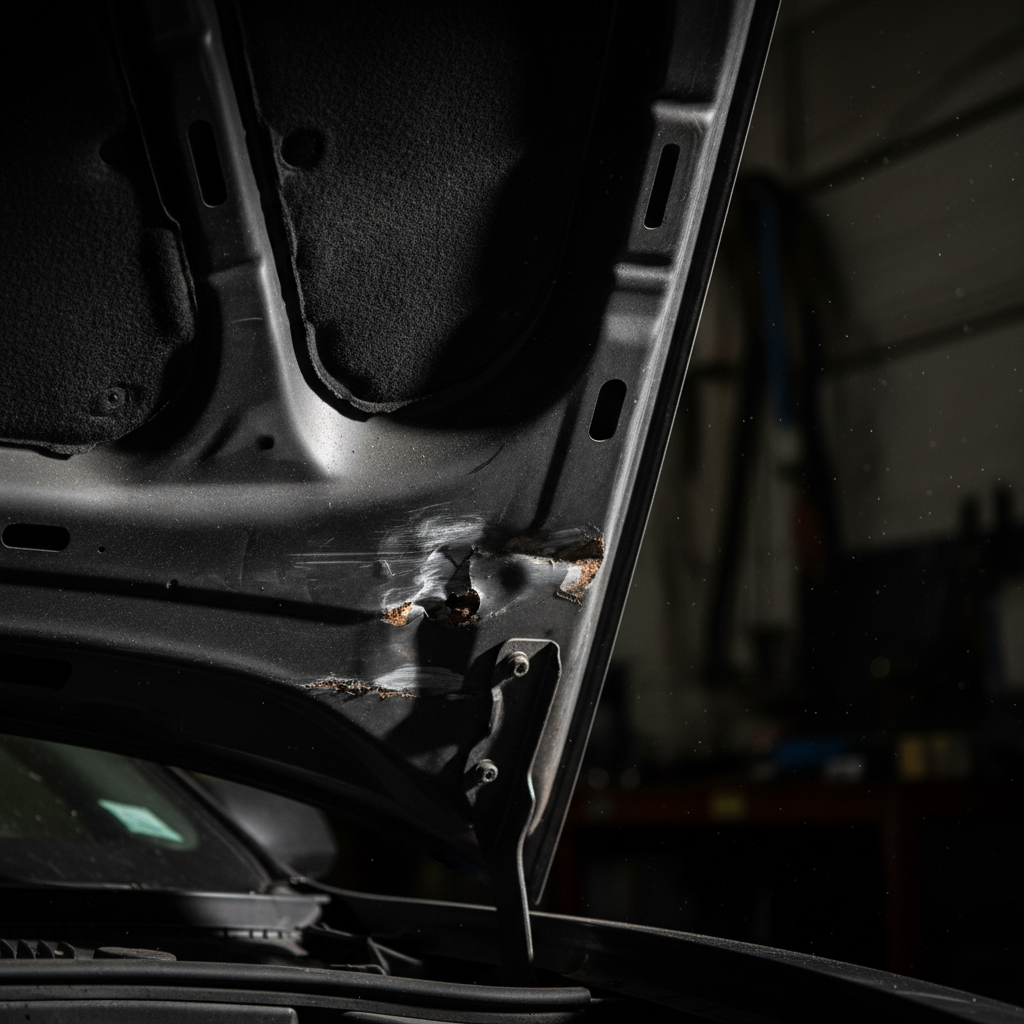
The visual shorthand provided by highlight icons often creates a false sense of security for retail bidders. When learning how to read Copart auction listings, it is critical to recognize that the "Run & Drive" icon is an "at time of arrival" indicator. This designation merely confirms that, when the vehicle first entered the facility, it started, idled, and moved forward and backward under its own power. It is not a certification of roadworthiness or mechanical longevity. For an institutional buyer, this icon represents a starting point for investigation rather than a conclusion.
A vehicle can maintain its Run & Drive status while harboring significant transmission slippage, overheating issues, or severe suspension damage that only manifests at higher speeds. Similarly, the "Enhanced" icon frequently indicates that the vehicle has been vacuumed, washed, or detailed. While this improves the visual appeal, it often serves to obscure leaks or interior wear. Professional investors bypass this surface level presentation by generating Vehicle Intelligence Reports™. These reports utilize precision analytics to cross-reference the listing with historical data, identifying if a vehicle has structural risks or hidden export limitations that an icon cannot capture.
Icon | Public Perception | Institutional Reality |
|---|---|---|
Run & Drive | Ready to drive | Movement confirmed only at intake; potential internal engine or gearbox failure |
Enhanced | High quality | Cosmetic cleaning performed; may mask fluid leaks or interior odors |
Engine Start Program | Working engine | Engine started and idled at intake; no movement test performed |
By incorporating these findings into the Investment Score™, buyers can adjust their Institutional-grade membership strategies to account for the risk of mechanical failure. Relying solely on icons without verifying structural integrity through deep-data reporting is a primary cause of capital loss in high-volume auctions.
Navigating the Canadian Market: Ontario and Beyond
For institutional buyers looking at how to read Copart auction listings Ontario, understanding regional title branding is a prerequisite for capital protection. In Ontario, the distinction between Salvage and Irreparable is absolute. A Salvage title indicates the vehicle can be rebuilt and returned to the road after passing a mandatory Structural Inspection. Conversely, an Irreparable title is a terminal designation; the vehicle can only be used for parts or scrap. This distinction fundamentally alters your Investment Score™. An Ontario vehicle branded Irreparable has zero resale value as a functioning unit and severely limited export readiness, often failing to clear customs as anything other than waste.
When determining how to bid on Copart Canada, professional investors must also account for the tax landscape. Institutional-grade accounting requires a clear understanding of GST and HST implications, which vary significantly from British Columbia to Ontario. Unlike hobbyists who may overlook these soft costs, professionals integrate tax obligations into their Maximum Bid™ calculations to maintain net margins. Utilizing Market Demand™ assessments allows buyers to determine if the local market in Toronto justifies the higher acquisition costs compared to listings in Western Canada. By applying precision analytics to these regional variables, investors ensure their portfolio remains resilient against provincial regulatory shifts.
Interpreting Odometer Codes and Title Brandings
Moving from provincial regulations to the specific data points on the listing page, understanding odometer and title codes is a critical step in how to read Copart auction listings with institutional precision. These codes provide the most direct insight into an asset's historical usage and its future liquidity.
An "ACTUAL" reading is the gold standard for professional buyers, providing a verifiable basis for precision analytics. Conversely, "NOT ACTUAL" signals a discrepancy that can permanently impair resale value and limit financing options for the end buyer. "EXEMPT" status typically applies to older assets where the state or province no longer mandates mileage tracking. This introduces a layer of data uncertainty that must be balanced against the vehicle’s physical wear.
Odometer Code | Definition | Institutional Strategy |
|---|---|---|
ACTUAL | Mileage is accurate and verifiable | Primary target for high-liquidity portfolios |
NOT ACTUAL | Known discrepancy or tampered unit | High risk; requires significant margin to justify |
EXEMPT | Mileage not legally required to be reported | Neutral; depends on physical mechanical assessment |
EXCEEDS MECHANICAL LIMITS | Odometer has rolled over (typically 5-digit) | Disqualified for modern fleets; niche play for classics |
Beyond mileage, buyers frequently ask: what does RB mean in auction? This code stands for Rebuilt, indicating the vehicle was previously salvaged and has since been certified as roadworthy. For the investor, an RB title significantly lowers the Investment Score™. Because the asset has already undergone a repair cycle, the profit ceiling is capped and Market Demand™ assessments show a narrower pool of secondary buyers. Users with an Institutional-grade membership generally prioritize original salvage titles over rebuilt units to capture the full margin during the restoration and resale process.
Advanced Analytics: Translating Listing Data into ROI Forecasts™

The transition from identifying listing attributes to generating a financial model is where a bidder becomes an investor. When you understand how to read Copart auction listings through a quantitative lens, the data points cease to be descriptions and become variables in a valuation equation. This process begins with a Maximum Bid™ calculation. Rather than reacting to the live auction’s momentum, institutional buyers determine the absolute ceiling for a lot by subtracting anticipated repair costs, logistics, and target margins from the projected resale value.
Variable | Institutional Utility | Impact on ROI |
|---|---|---|
Projected Retail | Determined by localized market comps | Defines the absolute ceiling for the lot |
Logistics Load | Shipping, storage, and port fees | Direct reduction of the net margin |
Market Demand™ | Regional liquidity and buyer appetite | Controls the speed of capital turnover |
A critical component of this valuation is the role of Market Demand™ assessments. A vehicle located in Vancouver carries a different investment profile than the exact same model in Toronto. For a White Rock based investor, the proximity to West Coast ports may enhance export readiness and reduce transport overhead for international buyers, whereas the same asset in Ontario might face higher domestic competition but lower internal transport costs to major metro hubs. Understanding these regional arbitrage opportunities allows for more aggressive bidding on high-demand units while avoiding over-extension on stagnant inventory.
By synthesizing these factors, an Investment Score™ provides a standardized metric to compare disparate lots across different provinces. This level of precision analytics transforms raw auction data into ROI Forecasts™, ensuring that every dollar of capital is deployed with a clear expectation of the net return. Securing an Institutional-grade membership moves your strategy away from the uncertainty of the hammer price and toward a disciplined approach focused on portfolio growth. This transition from reading to valuing ensures that your participation in the auction is governed by math, not momentum.
Common Auction Mistakes and the Five Minute Rule

The final hurdle in mastering how to read Copart auction listings is overcoming the psychological pressure of the live event. Institutional buyers treat the auction as the fulfillment of a pre-calculated plan, not a negotiation. One of the most common auction mistakes is chasing a lot, which occurs when a bidder increases their limit mid-auction due to competitive adrenaline. This reactive behavior ignores the Investment Score™ and erodes the project's net margin before the vehicle even leaves the yard.
The 5 minute rule in institutional circles represents the final pre-bid cooling-off period. Professionals use the five minutes before a lot goes live to lock in their Maximum Bid™ and verify that no last-minute status changes have appeared on the listing page. This period is dedicated to a final review of Market Demand™ assessments to ensure the local resale environment remains favorable. By the time the hammer starts, the decision has already been made.
Common Mistake | Institutional Correction | Impact |
|---|---|---|
Emotional Bidding | Pre-set Maximum Bid™ based on hard data | Preserves target profit margins |
Icon Reliance | Verifying data via precision analytics | Avoids undisclosed mechanical costs |
Budgeting Errors | Including auction fees and provincial taxes | Ensures accurate ROI Forecasts™ |
By maintaining this level of discipline, users with an Institutional-grade membership avoid the pitfalls that trap retail bidders. They recognize that the auction floor is a place to execute a data-driven strategy, not to develop one on the fly.
Mastering the nuances of Copart listings is the best way to protect your capital and find the highest quality inventory. By paying attention to the same details as institutional buyers, you can avoid common pitfalls and bid with confidence. Learning this system takes significant effort; however, you do not have to manage the research yourself. If you want expert help finding your next vehicle, visit our Home page to learn how we simplify the entire process for you.